Homeopathic Remedy Belladonna: A Comprehensive Guide
If you have ever watched a child suddenly spike a high fever, face flushed crimson, eyes glassy and pupils wide, you might have witnessed a state that homeopaths have described for more than two centuries as a classic Belladonna picture. The remedy, derived from one of the most poisonous plants in the world, occupies a unique place in homeopathic medicine. Despite its deadly reputation in crude form, when prepared according to homeopathic principles, Belladonna becomes a gentle yet powerful healing tool. Let me walk you through everything you need to know about this remarkable remedy, from its botanical origins to its modern clinical applications.
Origin and Botanical Background
Belladonna, known scientifically as Atropa belladonna, belongs to the nightshade family Solanaceae, which also includes other potent plants like deadly nightshade, henbane, and mandrake. The name Atropa comes from Greek mythology—Atropos was one of the three Fates, the one who cut the thread of life. This name alone signals the plant’s lethal potential. The word belladonna means “beautiful lady” in Italian, a reference to Renaissance women who used diluted extracts of the plant to dilate their pupils, believing this made them more attractive.
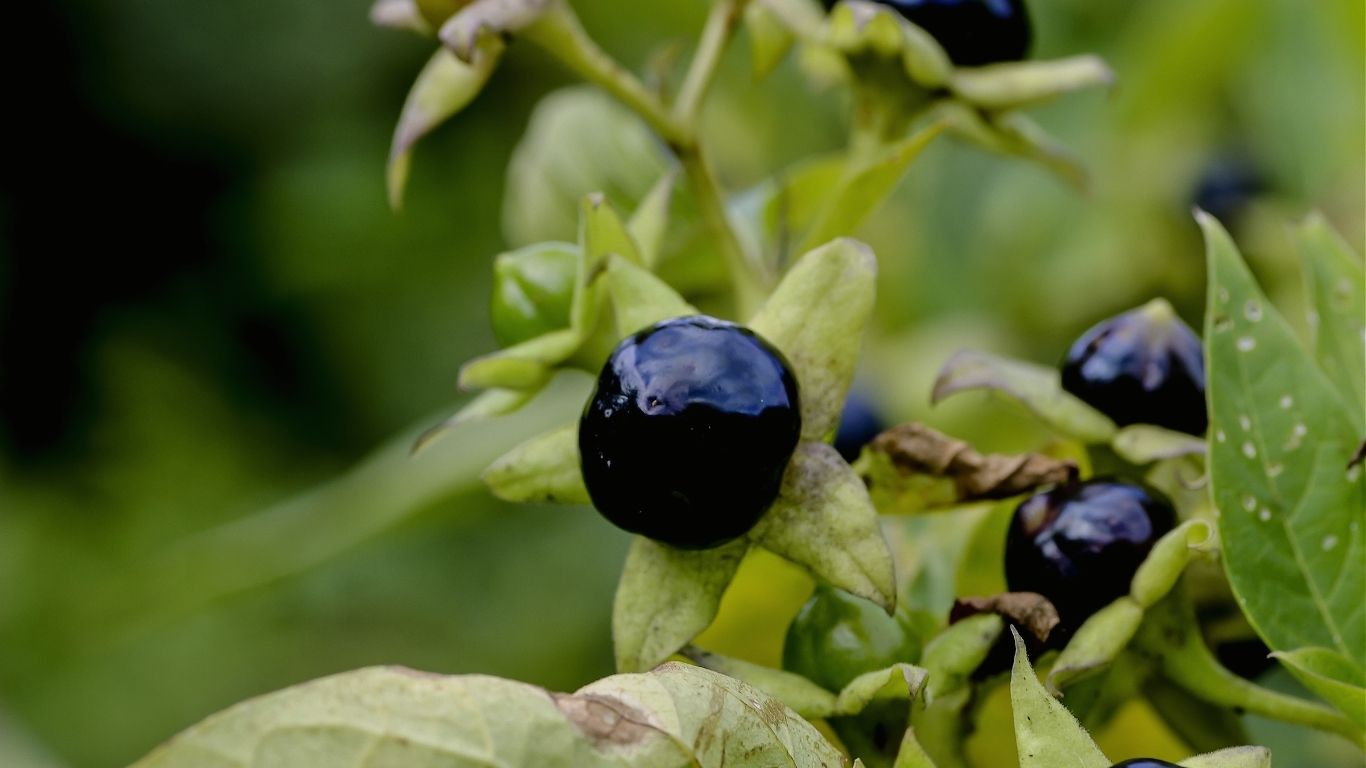
The plant itself is a perennial herb that grows wild across Europe, North Africa, and Western Asia. It favors chalky soils, woodland edges, and ruined buildings. Belladonna can reach up to five feet in height, with dull green leaves, purple-brown bell-shaped flowers that appear in summer, and glossy black berries about the size of cherries. Those berries are deceptively sweet and have poisoned many children throughout history. Every part of the plant contains tropane alkaloids—hyoscyamine, atropine, and scopolamine—which in sufficient doses cause paralysis of the autonomic nervous system, leading to rapid heartbeat, hallucinations, loss of coordination, and eventually respiratory failure.
From Poison to Medicine: The Extraction Process
In homeopathy, the preparation of Belladonna follows the same meticulous methodology used for all remedies. The process begins with the fresh whole plant, harvested at its peak flowering stage when alkaloid content is highest. Homeopaths believe that the plant’s medicinal essence is most concentrated at this moment.
The extraction involves several steps. First, the freshly gathered leaves, stems, flowers, and sometimes roots are washed carefully and then chopped finely. These plant parts are soaked in alcohol—typically 95% ethyl alcohol—for about two to four weeks in a sealed glass container. During this period, the alcohol draws out the soluble components of the plant, creating what homeopaths call the mother tincture, designated as Ø (zero) potency. The mother tincture is then filtered and stored.
From this mother tincture, homeopathic dilutions are prepared through a process called potentization or dynamization. One drop of the mother tincture is mixed with ninety-nine drops of alcohol (or nine drops if using the decimal scale, but the centesimal scale is more common for Belladonna). This mixture is then vigorously shaken or succussed, a process that homeopaths believe releases the plant’s energetic signature while reducing its material toxicity. The resulting dilution is labeled 1C. One drop of that solution is then mixed with another ninety-nine drops of alcohol and succussed again to produce 2C. This process repeats to achieve higher potencies like 6C, 30C, 200C, 1M, and even 10M or CM. By the time a 12C potency is reached, not a single molecule of the original plant material remains—only the energetic imprint.
Potencies and How They Are Used
Homeopathic Belladonna comes in a wide range of potencies, and the choice of potency depends on the acuteness of the condition, the sensitivity of the patient, and the experience of the practitioner.
Low potencies such as 6C, 12C, and 30C are commonly used for acute conditions that the patient is managing at home. A 30C is often the first choice for sudden fevers, throbbing headaches, or earaches that come on rapidly. These potencies are typically taken every fifteen to thirty minutes in severe acute situations, then less frequently as improvement begins.
Medium potencies like 200C are usually reserved for more intense acute episodes or for constitutional prescribing under a professional homeopath’s guidance. A single dose of Belladonna 200C might be given at the onset of mastitis with red, hot breasts, or for a sudden attack of tonsillitis with bright red throat and difficulty swallowing.
High potencies such as 1M, 10M, and CM are rarely used in self-care. These require significant homeopathic experience and are typically prescribed for deep-seated chronic conditions or for highly sensitive individuals who respond to very minimal doses. A single dose of Belladonna 1M might be given for recurrent migraines that come on with sudden intensity, heat, and throbbing.
The Complete Symptom Picture
Understanding Belladonna means understanding its characteristic symptom pattern. Homeopathy does not use Belladonna for a disease name like “migraine” or “ear infection.” Instead, we match the patient’s specific symptoms to the remedy’s unique profile.
The Belladonna patient often has a striking appearance. The face is intensely red, hot, and flushed, sometimes alternating with paleness. The eyes are bright, glassy, and staring, with pupils dilated even in bright light. The patient may seem wild, frightened, or even delirious. They might talk rapidly, bite, strike out, or see frightening visions—dogs, insects, or faces appearing on the wall. Children who need Belladonna often scream out suddenly in their sleep or wake with a start.
Heat is a dominant feature throughout the Belladonna picture. The head feels hot to touch, but the hands and feet may be cold. Despite the fever, the patient often feels chilly and wants to be covered, yet throws off the covers in restless discomfort. There is great thirst for cold drinks, but strangely, drinking may cause choking or coughing. The mouth and throat are dry despite the thirst.
Pain in Belladonna is distinctive. It comes on suddenly, lasts for a while, and disappears just as suddenly. The pain is throbbing, beating, or bursting—patients often say it feels like the head or the affected part will explode. Pulsations can be felt throughout the body, and the carotids may visibly beat. The pain is worse from touch, jarring, noise, light, and lying down. Even a slight draft of cold air can aggravate.
Another key feature is the right-sided tendency. Belladonna symptoms often begin on the right side of the body or are more intense there. The right tonsil, right ovary, or right testicle is typically more affected. However, a small but notable number of patients have left-sided symptoms instead.
Clinical Indications and Uses
Belladonna’s most celebrated use is in acute febrile illnesses that come on with explosive suddenness. A child playing happily at noon might be burning with fever by two o’clock, with no apparent gradual onset. This suddenness is almost diagnostic for Belladonna. The fever is high, often 104°F or higher, and the patient’s head and face are hot while the extremities are cool. There may be no sweating, or only on the head.
In headaches, Belladonna is a leading remedy for throbbing, bursting headaches that worsen with motion, light, or stooping forward. People describe the pain as though the head is being squeezed in a vice or as if hundreds of little hammers are beating inside the skull. The patient wants to lie perfectly still in a dark, quiet room. Reading or even glancing around makes the pain worse.
Ear infections that call for Belladonna come on rapidly, often after exposure to cold wind or draft. The ear is bright red, hot, and extremely sensitive to touch. The pain is throbbing and worse on the right side. Children with this condition are inconsolable and may pull at the ear. The eardrum often appears bulging and red on examination.
For sore throats, Belladonna suits bright red, dry, glistening throats that look like raw meat. Swallowing is difficult, especially liquids, which may come out through the nose. The tonsils are swollen and red, and there may be a sensation of a lump or plug in the throat that cannot be swallowed.
In urinary conditions, Belladonna helps when there is sudden, intense urging to urinate with spasmodic pain in the bladder. The urine may be scanty, hot, and passed drop by drop.
For menstrual and breast complaints, Belladonna is valuable for suddenly onset, violent labor-like pains in the pelvis with a sensation that everything will come out. Breasts that are red, hot, shiny, and exquisitely tender with throbbing pain—as seen in mastitis—often respond to Belladonna.
In gastrointestinal upsets, Belladonna suits sudden colic with the patient drawing up the legs, the abdomen hard and distended, and intense pain worse from touch or jarring. The child may roll about, yet lying on the abdomen brings some relief.
Belladonna also has applications in whooping cough with sudden, violent paroxysms that end in gagging or vomiting, with the face turning red during coughing fits. In neuralgias, especially facial neuralgia with hot, red face and throbbing pain that comes and goes suddenly, Belladonna can be remarkably effective.
Prevention and When to Use
Homeopaths often think of Belladonna preventively in certain situations. For example, a child known to develop fevers suddenly after getting a chill from wet hair or cold wind might take a single dose of Belladonna 30C as soon as the exposure occurs, before any symptoms develop. Similarly, people prone to sunstroke or heat-related headaches may carry Belladonna 30C with them during hot weather.
I want to be very clear about prevention in a different sense. Belladonna in its crude plant form is deadly poisonous, and homeopathic preparations are not a substitute for keeping actual Belladonna plants away from children. Prevention of poisoning means educating everyone in the household never to eat any part of the plant or its sweet berries, which children often mistake for edible fruits. If accidental ingestion occurs, this is a medical emergency requiring immediate hospital care.
Side Effects and Safety Considerations
Properly prepared homeopathic Belladonna in potencies of 6C and above has no known toxic effects. The dilution process removes all original plant material well before the 12C potency, so there is no risk of atropine poisoning. However, one can experience what homeopaths call a homeopathic aggravation—a temporary worsening of existing symptoms after taking a remedy, particularly when a high potency is used in a very sensitive patient. This aggravation is usually mild and brief, lasting minutes to a few hours, and is considered a favorable sign that the remedy is working.
There are important safety caveats. Low potencies such as 1X, 2X, or 3X (the X scale refers to dilutions of 1:10 rather than 1:100) still contain measurable amounts of plant material. These are rarely used in homeopathy today and should not be taken without professional supervision. Most commercially available Belladonna in health food stores is 6C, 12C, or 30C, which are safe for general use.
Never confuse homeopathic Belladonna with the herb belladonna sold in some herbal shops. Herbal belladonna contains toxic alkaloids and should never be consumed internally. Topical belladonna plasters or ointments for pain relief have caused poisoning, especially in children who lick or suck the applied area.
Certain populations should exercise additional caution. Pregnant and breastfeeding women should consult a qualified homeopath before taking Belladonna, even in high potencies, because although no toxicity is expected, there is insufficient research on safety during pregnancy. People taking anticholinergic medications for conditions like overactive bladder, Parkinson’s disease, or COPD should also seek professional guidance, as homeopathic remedies can theoretically interact with these drugs through subtle energetic effects that are not yet well understood by conventional medicine.
Comparisons with Other Homeopathic Remedies
Belladonna shares its sudden, violent, inflammatory picture with several other remedies, and distinguishing among them is where homeopathy becomes an art.
Aconite is perhaps the most frequent comparison. Both Belladonna and Aconite have sudden onset of fever, restlessness, and fear. However, Aconite’s fear is of death, with the patient predicting exactly when they will die. Aconite’s fever is associated with hot, dry skin and intense thirst for cold water, but the face may alternate between red and pale. Belladonna’s fever has that characteristic hot head with cold extremities, and the patient may strike out or be delirious rather than calmly expressing fear. Aconite is better for the very first stage of an illness, often after exposure to cold dry wind, while Belladonna suits the fully developed inflammatory stage.
Ferrum phosphoricum sits between Aconite and Belladonna on the fever spectrum. The Ferrum phos patient has a moderate fever, not extremely high, with a flushed face that is not as intensely red as Belladonna. There is no marked delirium or throbbing pain. Ferrum phos is often the first remedy for a mild fever when you are unsure whether it will progress to needing something stronger.
Bryonia alba is another hot, inflammatory remedy with throbbing headaches and fever. The key difference is that Bryonia patients want to lie absolutely still and not be touched or moved at all, similar to Belladonna. But Bryonia has intense thirst for large amounts of cold water at long intervals, while Belladonna has thirst for small sips often. The Bryonia patient is irritable and wants only to be left alone, whereas the Belladonna patient may be wild, talkative, or even violent. Also, Bryonia is worse from any motion, while Belladonna is worse from jarring, light, and noise.
Apis mellifica, from the honeybee, has redness and heat similar to Belladonna but with edematous swelling. The Apis patient is worse from heat and better from cold applications, while Belladonna is generally worse from cold drafts. Apis has stinging, burning pains, not throbbing. The Apis patient is often cross, whining, and clumsy, unlike Belladonna’s violent delirium.
For ear infections specifically, Chamomilla is a close comparison. Both have sudden, violent earaches with great sensitivity. The Chamomilla child is extremely irritable, wants to be carried, and is inconsolable, demanding one thing after another only to throw it away. The Chamomilla cheek is red and hot, but only on one side, and the child is worse from warmth. Belladonna’s child is more likely to be wild, with dilated pupils and throbbing pain.
In headaches, Glonoinum (nitroglycerin) has bursting headaches with intense heat and throbbing similar to Belladonna. Glonoinum’s headaches are caused by sun exposure or hot baths, and the patient feels better from cold applications to the head. Belladonna’s headaches are typically not relieved by cold.
Practical Tips for Using Belladonna at Home
If you decide to keep Belladonna in your home medicine kit, purchase it from a reputable homeopathic manufacturer. It is usually sold in small vials of sugar pellets impregnated with the remedy. Store it away from strong smells like camphor, mint, or coffee, and keep it out of direct sunlight and away from mobile phones or other electromagnetic sources—homeopaths believe these can degrade the remedy’s energy.
For an acute fever or headache, Belladonna 30C taken as three to five pellets dissolved under the tongue every thirty to sixty minutes for up to three doses is a standard approach. If no improvement occurs after three doses, either you have misjudged the remedy or the condition requires professional attention. If improvement begins but then stalls, wait longer between doses—two hours, then four hours, then stop repeating once symptoms resolve fully.
Do not touch the pellets with your hands, as skin oils can contaminate them. Tip them directly into the bottle cap and then into the patient’s mouth. Avoid eating or drinking anything for fifteen to twenty minutes before and after taking the remedy.
Finally, know when home care is not enough. High fever in an infant under three months, fever with stiff neck or bulging fontanel, difficulty breathing, severe lethargy, or any seizure requires immediate medical evaluation regardless of any homeopathic remedy you have given. Belladonna is a support, not a substitute, for emergency care when needed.

1 thought on “Homeopathic Remedy Belladonna”