Homeopathic Remedy Arnica Montana: The Fallen Warrior’s Balm
If you have ever wandered into a homeopathic pharmacy or chatted with a long-distance runner about natural recovery, one name is almost certain to come up: Arnica montana. Known colloquially as the “mountain daisy” or “fall herb,” this remedy holds a near-legendary status in homeopathy. It is often the first thing reached for after a bump, a bruise, or a bout of physical exhaustion. But despite its popularity, Arnica is frequently misunderstood. It is not a simple anti-inflammatory pill, nor a one-size-fits-all pain reliever. To truly understand Arnica, we need to climb the mountains where it grows, explore the careful method of its preparation, and listen to the unique language of symptoms that defines its use.
Origin and Botanical Background
Arnica montana is a perennial flowering plant that belongs to the sunflower family (Asteraceae). Its name is thought to derive from the Greek word arnakis, meaning “lamb’s skin,” a reference to the soft, downy texture of its leaves. True to its name, montana thrives in mountainous regions of central and northern Europe, including the Swiss Alps, the Pyrenees, the Carpathians, and Scandinavia. It favors acidic, nutrient-poor soils in siliceous meadows and open woodlands, usually at altitudes between 500 and 2,500 meters.
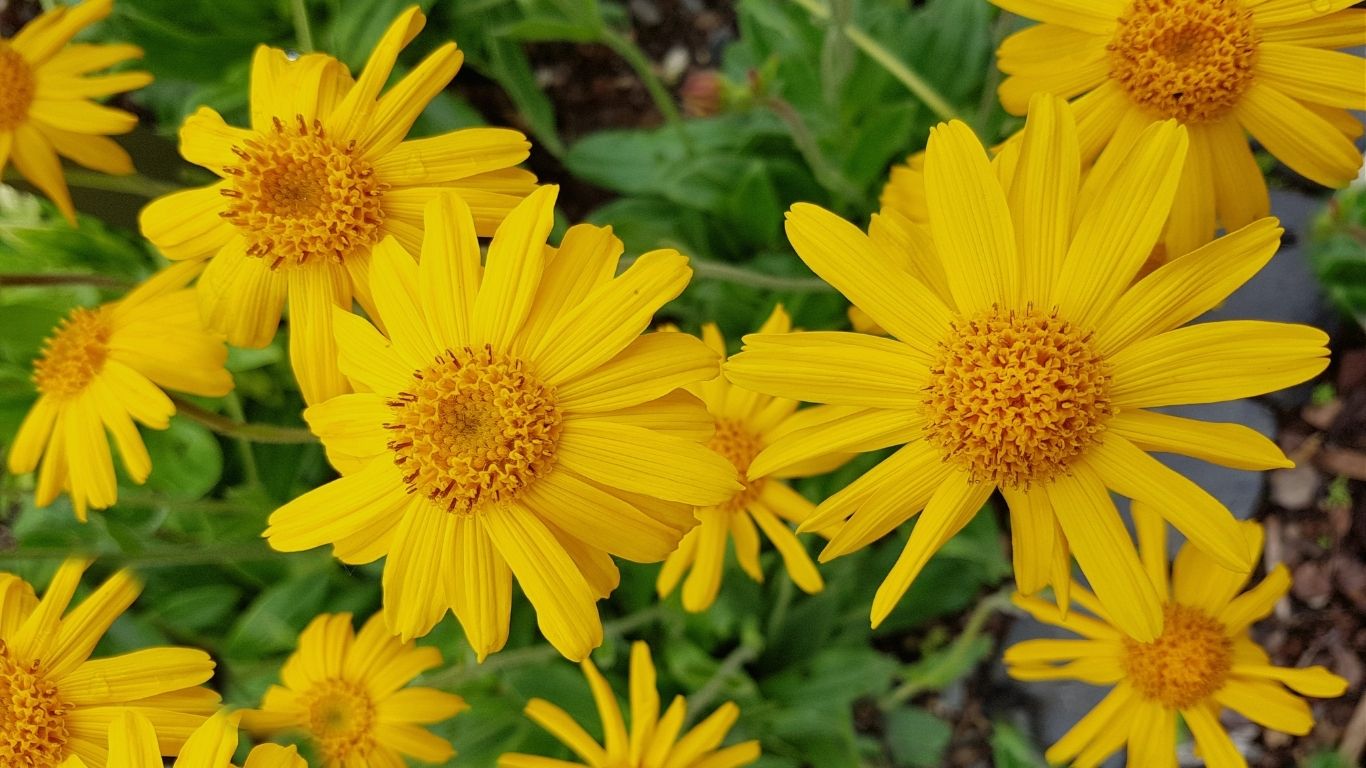
The plant is a modest, clump-forming herb, growing only to about 20 to 60 centimeters in height. It produces solitary, bright yellow, daisy-like flowers that bloom in midsummer. These flowers are the primary part used in homeopathic preparation. In the wild, Arnica is protected in many countries due to overharvesting, so ethical sourcing often involves cultivated plants or sustainable wildcrafting. In its raw, undiluted form, the plant is toxic. Its fresh leaves and flowers contain helenalin, a sesquiterpene lactone that can cause severe irritation to mucous membranes, skin blistering, and even cardiac and respiratory disturbances if ingested in large quantities. Homeopathy transforms this potentially dangerous plant into one of the most useful and gentle remedies in the materia medica.
The Extraction and Preparation Process
The transformation of poisonous Arnica into a healing remedy follows a strict pharmaceutical procedure outlined in homeopathic pharmacopoeias, such as the German Homeopathic Pharmacopoeia (GHP) or the Homeopathic Pharmacopoeia of the United States (HPUS).
The process begins with the fresh flowering plant, harvested at its peak vitality. The entire aerial parts—flowers, stems, and leaves—are gathered on a dry, sunny day. They are then washed, chopped, and macerated in alcohol (typically 90% ethanol) for several weeks. This initial step produces a liquid extract known as the mother tincture, designated as Ø (zero).
From this mother tincture, homeopathic potencies are created through a precise system of serial dilution and succussion (vigorous shaking). For example, to make a 1C potency, one part of the mother tincture is mixed with 99 parts of alcohol or water and then succussed. A 2C potency is made by taking one part of that 1C solution and mixing it with 99 parts of fresh solvent, followed by succussion. This process is repeated to achieve higher centesimal (C) or decimal (X) potencies. The iconic 30C potency, for instance, has been diluted 30 times at a ratio of 1:100.
Critics often argue that such dilutions contain no molecules of the original substance. Homeopathic theory, however, maintains that the process of succussion imprints the energetic signature of the substance onto the water-alcohol medium. For Arnica, this is crucial: the physical toxicity is removed, while the therapeutic pattern of the plant—related to trauma, bruising, and the aftermath of injury—is retained and potentized.
Understanding Arnica Potencies
Arnica is available in a wide range of potencies, and choosing the right one is more about the nature of the problem than the severity of the symptoms. Low potencies (6X, 6C, 12C) are generally used for acute, localized injuries with pronounced soreness. High potencies (200C, 1M, 10M) are reserved for chronic conditions, deep-seated trauma, or the emotional aftermath of accidents.
For a simple black eye or a bruised shin from walking into a table, 6C or 30C taken two or three times daily often works beautifully. For shock following a car accident or a fall from a horse, a single dose of 200C or 1M might be given immediately, followed by lower potencies for local soreness. It is a common and wise practice to start with low potencies and only use higher ones under the guidance of an experienced homeopath. Arnica should never be taken for more than a few days at a time unless specifically prescribed for a chronic condition, as its repeated use can sometimes lead to a temporary aggravation of symptoms.
The Complete Symptom Picture of Arnica Montana
In homeopathy, matching a remedy to a person is an art. Arnica is not for every injury or every sore muscle. It has a specific, vivid profile.
The key sensation of Arnica is soreness, bruising, and lameness as if beaten. The person feels as though the bed is too hard, even if it is a soft mattress. They toss and turn all night because every part that touches the bed feels bruised and painful. When they finally try to get up, the soreness is so profound that they fear moving will cause further injury.
A second hallmark is the fear of touch. An Arnica patient will often refuse help, warding off anyone who tries to examine or comfort them. “Don’t touch me!” is a classic Arnica phrase. This is not because they are angry, but because even the lightest pressure feels unbearable on their sore tissues.
Paradoxically, Arnica patients insist they are fine. After a serious accident, they will often say, “I’m perfectly well, nothing happened to me.” This denial of illness or injury is a deep psychological characteristic. They dislike sympathy and want to be left alone. However, if you observe them, you will see them wincing, moving slowly, and perhaps behaving in a detached, apathetic manner. In head injuries, this can be dangerously misleading; a patient who insists they are fine but is actually confused needs Arnica immediately.
The physical complaints are equally distinct. Bruises are dark, purple-black, and slow to fade. There is a feeling of swelling, even if no visible swelling exists. Hemorrhages, especially from small vessels (like after a tooth extraction or nosebleed from a fall), respond well. Stools may be dark and putrid. There is an aversion to warmth of bed; the patient wants the head cold but the body warm. They are worse from motion, from touch, from damp cold, and from overexertion. Conversely, they feel better lying down with the head low, and they often improve once they have been resting for a while.
Practical Uses and Clinical Indications
The list of Arnica’s practical applications is vast, but it can be grouped into several major categories.
First and foremost is trauma from physical injury. This includes falls, blows, sprains, fractures (after reduction by a doctor), and contusions. Surgeons often prescribe Arnica 30C before and after operations to reduce postoperative bruising, swelling, and pain. Studies have shown that patients who take Arnica before dental surgery or cosmetic procedures experience less ecchymosis and require less conventional pain medication.
Second is overexertion. Marathon runners, gym enthusiasts, or anyone who has done unaccustomed heavy lifting will benefit from Arnica for “muscle fever” (delayed onset muscle soreness). It relieves that heavy, lame, beaten-up feeling the day after intense exercise.
Third, Arnica is a crucial first-aid remedy for head injuries. If a child falls from a swing and hits their head, or an adult slips on ice, Arnica given immediately can prevent shock and reduce the risk of intracranial bleeding. However, this is a serious responsibility: if there is loss of consciousness, vomiting, unequal pupils, or worsening confusion, emergency medical care is non-negotiable. Arnica is an adjunct, not a substitute for a CT scan or neurosurgical evaluation.
Fourth, Arnica is used for certain circulatory issues, such as the sore, bruised feeling of varicose veins, or for nosebleeds that occur after a facial injury. It also has a place in treating bedsores (decubitus ulcers) in the early stages, where the skin is red, bruised, and extremely tender to touch.
Potential Side Effects and Important Precautions
While homeopathic Arnica is extremely safe when prepared properly, there are significant caveats. Never apply raw Arnica tincture or ointment to broken skin. The undiluted plant can cause severe contact dermatitis, blistering, and even ulceration. Homeopathic topical gels or creams that list Arnica as an ingredient in low potency (e.g., 1X or 3X) are generally safe for intact skin, but they should never be used on open wounds.
Similarly, internal use of the mother tincture or very low potencies (below 3X) can cause vomiting, dizziness, cardiac palpitations, and gastrointestinal distress. All commercial homeopathic Arnica pills, tablets, and liquid dilutions meant for oral use start at potencies that are biologically inert of the raw plant’s toxins. Nonetheless, it is wise to follow recommended dosages.
A less common but noteworthy phenomenon is a homeopathic aggravation. If a person takes Arnica too frequently or in too high a potency, their symptoms may temporarily worsen. This usually resolves upon stopping the remedy. For this reason, it is standard practice to give Arnica only as needed, typically three doses, and then wait to observe the response.
Certain individuals should avoid Arnica. Anyone with a known allergy to plants in the Asteraceae family (daisies, marigolds, echinacea, ragweed) might react even to the potency. Pregnant and breastfeeding women should consult a professional homeopath or their doctor before use, although Arnica is generally considered safe in low potencies for acute trauma during pregnancy when professionally indicated.
Prevention: When and How to Use Arnica Prophylactically
Prevention with Arnica is a nuanced topic. It is not a daily tonic like vitamin C. However, there are strategic preventive uses. For athletes anticipating a high-intensity event, taking Arnica 30C once the night before and once on the morning of the event can reduce post-exercise soreness. For a person with known fragile capillaries who bruises easily from minor bumps, a lower potency (6C) taken two to three times a week for a limited period may help reduce bruising tendency.
Another classic preventive use is before surgery. Many surgeons who are open to integrative medicine will suggest Arnica 30C three times daily for two days prior to an operation, and then continue for a few days afterward. This is not a guarantee against complications, but it can significantly reduce the purple-black discoloration and the deep aching that follows tissue manipulation.
In the context of travel or physical work, if you know you will be doing something that causes repetitive micro-trauma (like hammering or digging), a dose of Arnica before and after can prevent the next day’s stiffness. Prevention always means stopping the remedy once the anticipated stressor is over; continuous use dulls its effectiveness.
Comparisons with Other Homeopathic Remedies
One of the most practical skills in homeopathy is knowing how Arnica differs from other trauma and pain remedies. They are not interchangeable.
Arnica versus Ruta graveolens: Ruta is the remedy for injuries to periosteum (the covering of bones), tendons, and cartilage. If you have a deep bruise on the shin that feels bruised on the bone itself, or wrist pain after overuse that feels like the tendon is strained, Ruta is likely better. Arnica is for soft tissue, muscle, and general blunt trauma. Ruta has the characteristic sensation of “lameness” as if the tendon is too short.
Arnica versus Rhus toxicodendron: Rhus tox is the great remedy for stiffness that improves with continued motion. Think of the gardener who gets up in the morning, barely able to move their back, but once they start walking and gently stretching, they loosen up. Arnica’s pain is worse from any motion, period. Rhus tox loves hot baths; Arnica hates warm bedding and often craves cold applications.
Arnica versus Bellis perennis: Bellis (the common daisy) is often called “Arnica for the deep tissues.” It is indicated for injuries to the deeper, more vascular organs, such as the breasts, the abdomen, or the pelvic region after childbirth. If a woman has a bruised, sore uterus following delivery, Bellis is superior to Arnica. Also, Bellis is more suitable for injuries that occurred a week or two ago and are lingering, whereas Arnica is for the immediate aftermath.
Arnica versus Hypericum perforatum: Hypericum (St. John’s Wort) is the remedy for nerve injuries. If you smash a finger in a door and the pain shoots up your arm like lightning, or if you crush the tip of your toe and the pain is burning, lacerating, and radiating along the nerve path, Hypericum is needed. Arnica does not have that characteristic radiating, sharp nerve pain.
Arnica versus Ledum palustre: Ledum is for puncture wounds and for bruises that are cold to the touch. Ledum is excellent for a black eye caused by a small, sharp object (like a stick or a fingernail) and for insect bites that turn purple and feel cold. Arnica bruises are warm and throbbing; Ledum bruises are cool or cold. Ledum also has a peculiar symptom: the person wants cold water poured over the injury, but the cold worsens the pain—a paradox not found in Arnica.

3 thoughts on “Homeopathic Remedy Arnica Montana”