
Homeopathic Remedy Aconite Napellus: The Swift Responder to Shock and Sudden Illness
In the vast and often misunderstood world of homeopathy, few remedies command the same respect for speed and specificity as Aconite napellus. Derived from the monkshood plant, a creature of European mountain meadows and one of the most toxic botanicals known to nature, Aconite represents a fascinating paradox: a deadly poison transformed, through meticulous preparation, into a gentle yet powerful healing agent. Homeopaths often refer to Aconite as the “homeopathic aspirin” or the “first aid remedy for shock,” but these nicknames barely scratch the surface of its depth. This article explores Aconite napellus from the ground up, offering a human‑centered, detailed guide for students, practitioners, and curious individuals alike.
Origin and Botanical Description
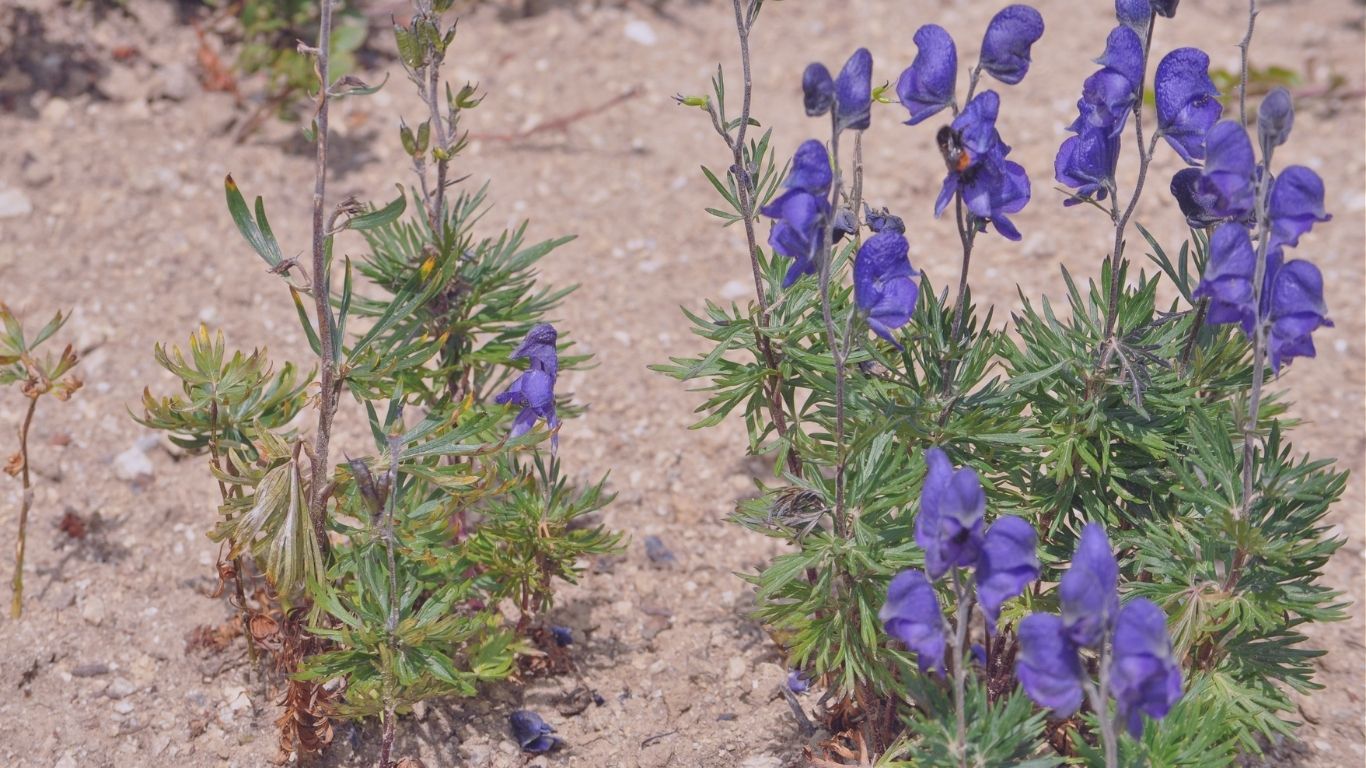
Aconite napellus, commonly called monkshood, wolfsbane, or blue rocket, is a perennial herb belonging to the Ranunculaceae family. It is native to the mountainous regions of central and southern Europe, though it has naturalized in parts of Asia and North America. The plant thrives in damp, shady places, often found along stream banks and in alpine meadows at altitudes between 1,500 and 3,000 meters. Its dark green, glossy leaves are palmate and deeply lobed, but the plant’s most distinctive feature is its helmet‑shaped (hooded) blue‑violet flowers, which appear in late summer. The entire plant is highly poisonous, containing the alkaloid aconitine, which in crude form acts as a potent neurotoxin and cardiotoxin. Historically, hunters used aconite to poison arrow tips (hence “wolfsbane”), and ancient cultures employed it as a lethal agent on battlefields. Yet, paradoxically, diluted beyond molecular recognition, this same substance becomes a remedy for acute fear, inflammation, and sudden illness.
Extraction and Preparation of the Homeopathic Remedy
The process of turning poisonous monkshood into a safe homeopathic medicine is governed by strict protocols outlined in the Homeopathic Pharmacopoeia. Fresh, whole Aconite napellus plants are gathered at the time of flowering, when the alkaloid content is highest. The freshly harvested plant—including root, stem, leaves, and flowers—is chopped and macerated in alcohol (typically 90% ethanol) to create a mother tincture (denoted as Ø or Q). This tincture retains the energetic signature of the original substance.
From the mother tincture, serial dilution and succussion (vigorous shaking) produce the various potencies used in practice. For low potencies like 1X (one part mother tincture diluted with nine parts alcohol or water), the process involves one step of dilution without succussion. However, for higher potencies, each step includes succussion. For example, a 30C potency involves a 1:100 dilution repeated 30 times, with succussion at each stage. This dynamization is believed to release the plant’s healing potential while eliminating any toxic residue. In practical terms, any Aconite remedy above 6C contains no detectable molecules of aconitine, a point that skeptics often raise but homeopaths attribute to nano‑energetic information.
Potencies and Their Uses
Aconite is versatile across a spectrum of potencies, each suited to different situations.
Low potencies (6C, 12C, 30C) are typically used for acute conditions: a sudden high fever after cold exposure, a panic attack with palpitations, or the early stages of a sore throat. In first‑aid kits, 30C is a common choice for shock, fright, or acute pain. Medium potencies (200C) might be employed for recurring, intense fear states or traumatic memories that resurface abruptly. High potencies (1M, 10M, 50M) are generally reserved for constitutional prescribing by professional homeopaths—these are for individuals who exhibit a chronic pattern of anxiety, a dread of their own death, or a tendency to startle easily. As a rule, the higher the potency, the deeper and longer‑lasting the action, but also the more selective the indication.
Characteristic Symptoms Indicating Aconite
In homeopathy, a remedy is not prescribed for a disease label but for a unique pattern of symptoms. Aconite has a distinct, vivid picture. The keynote is suddenness. Everything about an Aconite patient comes on fast—like a thunderclap. Fever, inflammation, pain, or anxiety begins after a specific trigger: exposure to dry, cold wind, a traumatic event, shock from bad news, or even a violent fright. The patient is intensely restless, both physically and mentally. They may pace the room, tear at their bedclothes, or constantly change position, yet find no relief.
Fear is the emotional cornerstone. The Aconite patient feels an overwhelming sense of impending doom—a certainty that something terrible will happen, often “tonight at midnight.” They fear death, crowds, the dark, and even the sight of others suffering. This fear can be so tangible that it mimics a heart attack: rapid, pounding pulse, shortness of breath, and flushing of the face. Unlike some remedies where the patient is apathetic, the Aconite patient is alert, agitated, and hyper‑sensitive to sensory stimuli—noises, light, music, even the smell of food can worsen their state.
Physical symptoms follow the same pattern. High fever comes on abruptly after cold wind or a fright, with burning heat but the patient may feel icy cold internally. Thirst is often intense for large quantities of cold water. Pain is almost always severe, sharp, or stitching, with numbness or tingling. A classic Aconite pain is a crushing headache, as if the head is in a vise, worse after exposure to sun or cold air, and better in the open air except when extremely cold. Inflammatory conditions—sudden croupy cough that sounds like a barking seal, acute mastitis from suppressed nursing, or red, dry, burning eyes—all point to Aconite when they appear abruptly.
Detailed Therapeutic Uses
Aconite’s scope is broad but very specific. It is not a remedy for long‑standing, dull, or slowly developing diseases. Instead, it shines in the first moments of acute illness or emotional trauma.
Fevers and Infections: Aconite is the premier remedy for the very onset of colds, flu, or childhood fevers when symptoms appear suddenly after dry, cold weather or a chill. The face is flushed red, pupils dilated, and the patient is hot to touch yet complains of coldness. If caught within the first 12‑24 hours, a single dose of Aconite 30C can often abort the illness entirely. Once there is sweating, discharge, or established localization (like a runny nose or productive cough), another remedy is usually needed.
Respiratory Conditions: The classic Aconite croup—sudden onset around midnight, harsh metallic cough worsened by inhaling cold air, and agitation—responds beautifully to Aconite. Similarly, early acute pleurisy with sharp, stitch‑like pains that worsen with any movement or deep breath, and a short, dry, painful cough.
Cardiovascular and Anxiety Symptoms: Patients with panic disorder often present with a pounding heart, numbness in limbs, fear of crossing the street or of being in enclosed spaces. Aconite can stop a full‑blown panic attack in minutes if given at the right moment. It is also useful for cardiac palpitations from fright, bad news, or stage fright before public speaking, provided the patient voices a fear of death or collapse.
Ear and Eye Conditions: Sudden earache after exposure to cold wind, with sharp stitching pains and extreme sensitivity to noise. Also for acute conjunctivitis that appears suddenly after a draft, with burning red eyes and grittiness.
Mental and Emotional Shock: After an accident, a sudden fright (a dog attack, a fall), or hearing shocking news, Aconite prevents post‑traumatic stress from embedding. The person may appear dazed, panicky, or unreachable. Homeopathic first aid for trauma often pairs Aconite with Arnica.
Labor and Delivery: For the mother who is terrified of childbirth, with a rapid, bounding pulse and a feeling that she or the baby will die during delivery. Aconite can help calm the fear and normalize uterine contractions when they are erratic from fright.
Side Effects, Dangers, and Prevention
Because homeopathic Aconite is prepared through successive dilutions, it is nontoxic and carries no risk of poisoning when used according to standard guidelines. However, several important precautions apply.
First, the crude plant substance is deadly. No one should ever ingest raw monkshood or any tincture that is not labeled as a homeopathic dilution. Symptoms of aconite poisoning include burning in the mouth, vomiting, irregular heartbeat, and descending paralysis—this requires immediate emergency treatment.
Second, homeopathic Aconite can cause a temporary “aggravation” of symptoms, especially in very sensitive individuals or if the potency is too high for the situation. For example, giving a 1M potency for a simple fever might increase restlessness or anxiety for a few hours before improvement begins. Homeopaths advise stopping the remedy at the first sign of improvement, as repeating doses unnecessarily can also cause a return of symptoms (a “proving” effect).
To prevent side effects: never use high potencies without professional guidance. For acute first aid, 30C is generally safe, taken one to three doses at intervals of 15 minutes to an hour. If after three doses there is no change, Aconite is likely not the correct remedy. Do not touch the pellets with bare hands (pour them into the cap) to avoid absorbing unintended energetic influences. Store away from strong smells like camphor, menthol, coffee, or mint, which can neutralize the remedy.
Comparisons with Other Homeopathic Remedies
Understanding Aconite becomes richer when contrasted with its homeopathic relatives.
Aconite versus Belladonna: Both have sudden onset, high fever, redness, and throbbing pains. However, Belladonna is characterized by violent delirium, staggering gait, dilated pupils that do not respond to light, and a sensation of heat without much fear. Aconite’s patient is focused on their fear and impending death, while Belladonna’s patient might bite, hit, or see hallucinations. Belladonna also has a dry mouth without thirst. In fever, Aconite avoids light and noise; Belladonna avoids light but may be indifferent to noise.
Aconite versus Ferrum phosphoricum: Ferrum phos is often the remedy when you cannot decide between Aconite (violent sudden fever) and Gelsemium (slow, heavy, dull fever). Ferrum phos is for low‑grade, gradual fever with mild redness and a feeling of weakness. Aconite is the hurricane; Ferrum phos is the drizzle. In first aid, Ferrum phos can follow Aconite when the acute stage has passed but inflammation lingers.
Aconite versus Arsenicum album: Both have intense restlessness and fear of death. The Arsenicum patient is chilly, wants warm drinks, and fears being alone or out of order. Their restlessness is fastidious—they move from bed to chair, straightening things. The Aconite patient is equally restless but fears crowds and predicts a specific catastrophe at a specific time. Arsenicum’s pain is burning and better from heat; Aconite’s pain is sharp and better from open air but worse from cold specifically.
Aconite versus Gelsemium: Gelsemium is the opposite pole. Where Aconite is hot, flushed, and panicky, Gelsemium is pale, heavy‑eyed, drowsy, trembling, and dull. Gelsemium’s fear leads to paralysis and an inability to act; Aconite’s fear leads to frantic action. Both can follow a fright, but the fright that yields Gelsemium causes diarrhea and heaviness; the fright that yields Aconite causes palpitations and a racing pulse.
Aconite versus Nux vomica: Nux vomica is for the overindulgent, irritable, chilly person whose symptoms build slowly after rich food or stimulants. Aconite’s patient is not irritable in a vengeful sense—they are terrified. Nux vomica has digestive troubles and waking at 3‑4 AM with clear mind; Aconite wakes at midnight feeling that death is imminent.
Aconite versus Opium: Both follow fright or shock. Opium patients are stupefied, unresponsive, even comatose after trauma—they are red‑faced, with slow, full pulse. Aconite patients are alert, agitated, and quick. Opium’s fear is absent (they are insensible); Aconite’s fear is hyper‑present.
FAQs About Homeopathic Remedy Aconite Napellus
1. Is Aconite napellus safe to take if the raw plant is poisonous?
Yes, absolutely. Homeopathic Aconite is prepared through a process of serial dilution and succussion (vigorous shaking). In any potency above 6C (or 6X for some preparations), there is no detectable molecule of the original toxic alkaloid aconitine left. What remains is the energetic blueprint of the substance. You cannot poison yourself with properly prepared homeopathic Aconite pellets or liquid dilutions. However, you should never handle, chew, or ingest the raw plant or any non‑homeopathic tincture labeled simply as “aconite.”
2. How quickly does Aconite work in an acute situation?
When it is the correct remedy, Aconite often works remarkably fast—sometimes within minutes. For example, if a child develops a sudden high fever with a red face and panicky restlessness after playing in cold wind, a single dose of Aconite 30C can begin to lower the fever and calm the child in 10 to 15 minutes. For a panic attack triggered by fright, relief can be almost immediate. The key is to give the remedy as soon as possible after the sudden onset of symptoms. If hours or days have passed with no change, Aconite is probably not the right match.
3. Can I give Aconite to babies and pregnant women?
Yes, with appropriate caution. Aconite is commonly used for infants with sudden fevers, croup, or fright from loud noises. For babies, crush one or two pellets of 30C between two spoons and dissolve the powder in a small amount of water (or breastmilk), then give a few drops from a clean spoon. For pregnant women, Aconite can be very helpful for acute anxiety, panic, or early signs of fever. Many homeopaths use it safely during labor if the mother expresses intense fear of dying or of something terrible happening. However, always consult a professional homeopath or your obstetrician before using any remedy regularly during pregnancy.
4. How do I know if Aconite is the wrong remedy?
Aconite is remarkably specific. If there is no sudden onset, no intense fear or restlessness, no trigger like cold wind or fright, or if the symptoms have been developing slowly over days, Aconite is unlikely to help. Also, if the person has thick yellow or green discharge, a runny nose, or sweating that brings relief—these signs indicate that the illness has moved to a later stage where other remedies like Belladonna, Pulsatilla, or Hepar sulphuris are more suitable. If after three doses (spaced 15 to 30 minutes apart) there is no improvement at all, stop and seek advice.
5. What does “fear of death at midnight” mean in relation to Aconite?
This is a classic homeopathic description, not a literal prophecy. People needing Aconite often feel that something terrible will happen at a specific time, most commonly midnight. They may wake abruptly around midnight in a state of terror, with a racing heart, feeling convinced they are dying or that a catastrophe is about to occur. It is a subjective symptom of acute anxiety. You do not need to have this exact symptom to use Aconite, but when it is present, it strongly confirms the remedy choice.
6. Can I take Aconite along with my regular prescription medications?
Generally, yes, because homeopathic remedies are non‑toxic and work on a different energetic level than pharmaceutical drugs. They do not interact chemically. However, some substances like strong coffee, mint, camphor (found in many vapor rubs and lip balms), and eucalyptus oil are known to antidote (cancel) the action of homeopathic remedies if taken too close together. It is best to keep 15‑30 minutes between Aconite and food, drink, or strong flavors, and to avoid camphor entirely while using homeopathic medicines. Always tell your doctor and homeopath about all medications you are taking.
7. How should I store Aconite pellets at home?
Keep them in a cool, dry, dark place away from direct sunlight, strong smells, and electromagnetic fields (like microwaves or Wi‑Fi routers). Do not store them in the refrigerator or bathroom cabinet where humidity fluctuates. Crucially, avoid touching the pellets with your fingers—pour them into the bottle cap or a clean spoon. Oils and residues from skin can degrade the remedy. Also keep them away from strong perfumes, menthol, minty toothpaste, and camphor‑based products.
8. What potency of Aconite should I keep in my home first‑aid kit?
For most acute, self‑limiting situations like sudden fright, shock, early fever, or croup, 30C is the most versatile potency. It is strong enough to act quickly but gentle enough to be safe for all ages. For very mild symptoms or for very sensitive individuals (infants, the elderly), 12C or 6C can be used. Many homeopathic first‑aid kits include Aconite 30C in a small multi‑dose tube. Avoid keeping 200C or higher potencies at home unless you have training, as they require more precise matching of symptoms.
9. Can Aconite prevent a cold or flu if taken after exposure?
Yes, this is one of its most celebrated uses. If you have been exposed to a dry, cold wind or a sudden temperature drop, and you feel that characteristic first sign—a dry scratchy throat, a feeling of chill, or a hint of restlessness—a dose of Aconite 30C taken immediately can sometimes abort the illness entirely. It works best within the first 6 to 12 hours of exposure, before any significant discharge or sweating appears. It will not work for every type of cold, but for the acute “caught a chill” scenario, it is excellent.
10. How is Aconite different from Arsenicum album for anxiety?
Both remedies have intense fear and restlessness, but the flavor of the fear is different. Aconite fear is sudden, loud, and focused on an immediate disaster—”I am dying right now.” The person is hot, flushed, and feels worse from cold air. Arsenicum fear is more chronic, methodical, and concerned with order, health, and being alone. The Arsenicum patient is chilly, wants to be wrapped up, feels better from warmth, and obsesses over germs or finances. In short: Aconite is the lightning strike; Arsenicum is the slow, cold drizzle of dread.
11. What happens if I take Aconite when I don’t need it?
For a healthy person, a single dose of Aconite 30C is unlikely to cause any noticeable effect at all. A few sensitive individuals might feel a brief, mild return of some symptoms (like a touch of restlessness or warmth), but this fades quickly. There is no danger of poisoning or harm. Repeated unnecessary doses over many days, however, could potentially create a temporary “proving” where you artificially produce mild Aconite‑like symptoms. The general rule is: stop taking the remedy once you see clear improvement, and never use it as a daily tonic. It is an acute remedy, not a constitutional supplement.
12. Can animals or pets benefit from Aconite?
Absolutely. Aconite is frequently used in veterinary homeopathy for dogs, cats, and even horses. It is indicated for the same sudden, fright‑based symptoms: a dog that panics during thunderstorms or fireworks, a cat that bolts after a loud noise and hides trembling, or a horse that develops a sudden fever after being clipped in cold weather. Give the same 30C potency, one pellet dissolved in a little water and offered by dropper or added to a small treat (avoid touching the pellet). For very small animals, use a single pellet crushed and dissolved in a teaspoon of water, then give a few drops.
Conclusion
Aconite napellus is a jewel in the homeopathic materia medica precisely because of its narrowness. It is not a cure‑all; it is a remedy for the razor’s edge of acute crisis—physical or emotional—that appears suddenly, violently, and with terror. Its origin as a deadly alpine flower reminds us of homeopathy’s core principle: “like cures like.” The very substance that in crude form stops the heart through shock, in dynamized form calms the heart overwhelmed by shock. When used respectfully and accurately, Aconite acts with astonishing speed, often ending a fever or a panic attack in minutes. Yet it also teaches humility: one wrong time, one wrong potency, or one confused symptom picture, and the remedy falls silent. For the careful student, Aconite remains an unparalleled ally in the medicine chest, ready to meet the sudden storm with swift, gentle, and decisive action.